New Jersey Mosquito Control Services, Best Exterminator Solutions
Article-At-A-Glance: What NY and NJ Homeowners Need to Know About Mosquito Control
- Mosquito season in New Jersey runs from April through October, with peak activity during hot, humid midsummer months — making early treatment essential.
- Some mosquito species transmit West Nile virus, making professional control a public health decision, not just a comfort one.
- The best mosquito control services combine barrier sprays, breeding source reduction, and recurring seasonal programs — one treatment alone won’t cut it.
- TNR Exterminators provides expert mosquito management across New Jersey and New York, helping families take back their outdoor spaces safely and effectively.
- There’s one hidden breeding spot in most yards that homeowners consistently overlook — and it’s likely feeding the mosquito population right now.
Mosquitoes aren’t just a nuisance — they’re a genuine threat to your family’s ability to enjoy the outdoors and, in some cases, their health.
New Jersey and New York sit in a climate zone that creates near-perfect conditions for mosquito breeding from spring through fall. Between the coastal marshes, inland retention ponds, and the countless containers sitting in backyards across the state, homeowners face one of the more challenging mosquito environments in the Northeast. TNR Exterminators works across New Jersey and New York helping residents identify, treat, and prevent mosquito problems before they take over the yard.
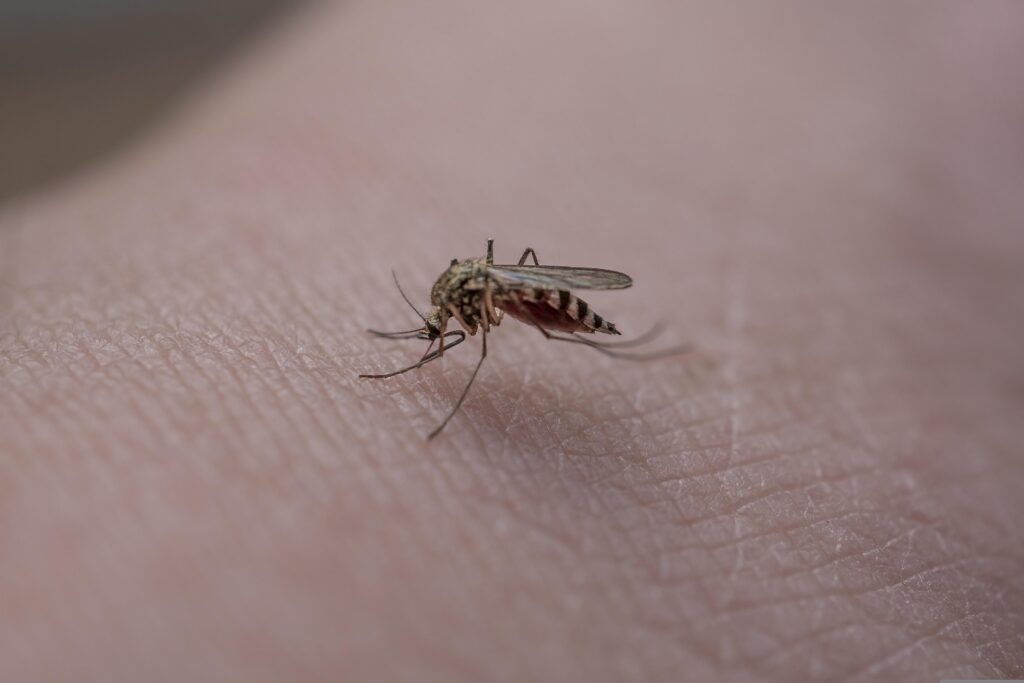
Mosquitoes Are More Than Just Annoying
Most people think of mosquitoes as a backyard inconvenience. The reality is more serious. In New Jersey, mosquitoes are classified as a public health concern by state agencies because certain species are capable of transmitting West Nile virus and other vector-borne illnesses.
West Nile Virus and Public Health Risks
West Nile virus is transmitted through the bite of an infected mosquito, and New Jersey has confirmed cases each season. The NJDEP and county mosquito control agencies actively monitor mosquito populations for signs of viral activity. While most people infected don’t show symptoms, older adults and those with compromised immune systems face more serious risks, including neurological complications.
This is exactly why integrated mosquito management — the approach recommended by NJDEP — goes beyond simply spraying the yard. It combines habitat modification, targeted pesticide use, and homeowner education to reduce both the mosquito population and the risk of disease transmission at the source.
How Mosquitoes Shut Down Your Backyard From April to October
Beyond the health angle, mosquitoes have a real impact on quality of life. Decks sit empty. Kids avoid the yard. Evenings outside become a battle. For homeowners, that’s more than half the year lost to a pest that breeds in as little as a bottle cap of standing water.
Peak biting activity hits hardest during July and August when heat and humidity spike, but populations are already building well before that. By the time most homeowners notice a serious mosquito problem, the breeding cycle is already several generations deep — which is why getting ahead of season is one of the most important things you can do.
Where Mosquitoes Breed (And Why It Matters)
Knowing where mosquitoes breed is the first step in controlling them. Mosquito breeding happens across a wide range of environments — some obvious, some easy to miss entirely.
Tidal Marshes, Retention Ponds, and Roadside Ditches
New Jersey’s geography creates natural mosquito hotspots that no homeowner can fully eliminate on their own. Tidal marshes along the coast, freshwater retention ponds in suburban developments, and roadside drainage ditches all serve as large-scale breeding grounds. County mosquito agencies manage many of these public areas, but that doesn’t mean your yard is protected by default.
These larger water sources feed the surrounding mosquito population. Even with county-level management in place, mosquitoes from nearby marshes and ponds will migrate into residential yards — which is why property-level treatment is still essential regardless of what’s happening at the county level.
The Hidden Breeding Spots in Your Own Yard
Here’s what most homeowners don’t realize: the biggest mosquito factory on your property might be something you walk past every day. Clogged gutters are one of the top mosquito breeding sites in residential yards. A gutter blocked with debris holds standing water for weeks — long enough for multiple mosquito generations to complete their life cycle.
Other common culprits include:
- Birdbaths that aren’t refreshed regularly
- Tarps or pool covers with water pooled on top
- Flower pot saucers and decorative containers
- Children’s toys, wagons, or play equipment left outside
- Low spots in the lawn that collect rainwater
- Uncleaned pet water bowls left outdoors
Under New Jersey statute NJSA 26:3-45, allowing artificial containers to hold stagnant water can be classified as a public health nuisance. That’s how seriously the state takes residential breeding sites.
How Professional Mosquito Control Actually Works
Professional mosquito control isn’t just showing up and spraying. The best mosquito services use a structured, multi-step approach that targets mosquitoes at every stage of their life cycle — egg, larva, pupa, and adult. Mosquitoes undergo complete metamorphosis, which means a single application targeting only adults leaves the next generation completely untouched.
Step 1: Inspection of Breeding and Resting Areas
A thorough inspection comes before any treatment. A qualified technician will walk the property looking for active breeding sites — standing water, dense vegetation, shaded resting areas, and structural issues like clogged gutters or poor drainage. This step determines where treatment will be focused and what products are appropriate for the specific conditions on your property.
Step 2: Barrier Spray Treatments
Barrier spray is the core of most professional mosquito control programs. A technician applies a residual treatment to the foliage, shrubs, ground cover, and shaded areas where adult mosquitoes rest during the day. Mosquitoes don’t just fly around constantly — they spend most of their time resting in cool, dark vegetation, which makes these areas the highest-impact targets for treatment.
The residual effect is what makes barrier sprays so valuable. A properly applied treatment continues killing mosquitoes that land on treated surfaces for days to weeks after application, creating a sustained protective zone around your yard rather than just a short-term knockdown of whatever mosquitoes happen to be present at the time of spraying.
Step 3: Breeding Source Reduction
Killing adult mosquitoes is only half the equation. Without addressing where they’re breeding, a new generation will be airborne within 7 to 10 days. Breeding source reduction focuses on eliminating or treating the standing water sources on and around your property to interrupt the reproductive cycle before it produces more biting adults.
For water that can’t be removed — like ornamental ponds, drainage areas, or large containers — technicians use larvicides to treat the water directly. These products target mosquito larvae specifically, breaking the life cycle at a stage before the mosquitoes ever become a problem. This is a key part of what the NJDEP and county mosquito agencies refer to as integrated mosquito management.
- Emptying or inverting containers that collect rainwater
- Treating ornamental ponds and water features with EPA-approved larvicides
- Clearing gutters and downspouts to eliminate overflow pooling
- Recommending drainage improvements for low-lying yard areas
- Identifying neighboring sources that may be feeding your yard’s mosquito population
When breeding source reduction is paired with barrier spraying, the combined effect is significantly stronger than either method alone. You’re not just killing what’s there — you’re preventing the next wave from developing.
Step 4: Recurring Seasonal Programs
A single treatment won’t hold up through an entire mosquito season. Most professional programs are structured as recurring seasonal packages, typically running from April or May through October — roughly 6 to 10 applications spaced every 2 to 3 weeks. Each visit reapplies the barrier, addresses any new breeding sources that have developed, and adjusts the treatment approach based on current conditions.
The compounding benefit of a seasonal program is significant. Each successive treatment hits a smaller and smaller mosquito population as the breeding cycle gets progressively disrupted. By mid-season, properties on recurring programs typically see dramatically reduced mosquito pressure compared to properties that received only one or two one-off treatments.
Treatment Safety: Family, Pets, and the Environment
Safety is one of the most common concerns homeowners raise before starting a mosquito control program — and it’s a completely valid one. The good news is that modern professional mosquito treatments have come a long way in terms of product refinement, targeted application, and environmental responsibility.
The key is choosing a service that takes product selection seriously and applies treatments according to NJDEP guidelines and EPA label directions. Application method matters as much as product choice — treatments applied to foliage and resting sites, rather than broadcast sprayed across the entire yard, dramatically reduce exposure to non-target areas.
Lower-Toxicity Products and NJDEP Compliance
Many of the products used by professional NJ mosquito control services are formulated to be effective against mosquitoes while maintaining a lower toxicity profile for humans and pets. Some providers use products described as milder than DEET, applied in targeted concentrations that maximize impact on mosquito resting sites while minimizing exposure everywhere else.
NJDEP requires that mosquito control applications comply with state environmental and wetlands rules — particularly important in a state with as much regulated wetland area as New Jersey. Reputable services operate within these guidelines and follow label directions precisely, which is both a legal requirement and a best practice for environmental stewardship.
After a barrier spray treatment, most services recommend keeping people and pets off treated surfaces until the application has dried — typically 30 to 45 minutes. Once dry, the treated foliage is considered safe for normal use. Always confirm dry-time recommendations with your specific service provider before treatment day.
Natural and Eco-Friendly Options Available
For homeowners who prefer to minimize synthetic chemical use, several mosquito control providers offer plant-based or reduced-risk product lines. These formulations use active ingredients derived from natural sources — such as essential oil compounds — that are effective against mosquitoes while carrying a gentler environmental profile.
Natural options tend to have a shorter residual window than synthetic treatments, which means they may require more frequent application to maintain the same level of protection. For some families, that trade-off is absolutely worth it — especially in yards where children and pets spend significant time on the grass and in treated vegetation areas.
The best approach is to discuss your priorities with your service provider before the season starts. A quality exterminator will offer both conventional and natural options and help you choose based on your yard’s specific conditions, your family’s needs, and the mosquito pressure in your area.
What Makes the Best Mosquito Exterminator Stand Out
Not all mosquito control services deliver the same results. The difference between a mediocre program and an excellent one often comes down to a few specific factors that separate companies genuinely committed to solving your mosquito problem from those just going through the motions.
Local Knowledge of New York and NJ Climates
New Jersey and New York isn’t a single uniform environment. Coastal counties like Monmouth and Ocean deal with salt marsh mosquito species that behave differently than the container-breeding species more common in inland counties like Morris or Somerset. A service with real local knowledge understands these distinctions and adjusts their treatment approach accordingly — timing applications to match regional hatch patterns and targeting the species actually present in your area.
This local expertise also means understanding the regulatory landscape. NJ has some of the most complex environmental regulations in the country, particularly around wetlands and buffer zones. A knowledgeable local provider navigates these rules correctly, protecting both your property and the surrounding environment.
Flexible Plans With No Long-Term Contracts
The best mosquito control services offer seasonal programs with clear pricing and no pressure to sign multi-year contracts. Look for providers that offer both recurring seasonal memberships — which give you the compounding protection of regular treatments — and one-time options for special events like backyard weddings, graduation parties, or outdoor gatherings where you need guaranteed protection for a specific date.
Results You Can See After the First Treatment
Most homeowners notice a meaningful reduction in mosquito activity within 24 to 48 hours of their first barrier spray treatment. The residual effect continues working for weeks, but that initial knockdown of the adult population resting in your yard’s vegetation is usually dramatic enough that you’ll feel the difference the next time you step outside in the evening.
What Homeowners Can Do Between Treatments
Professional treatments do the heavy lifting, but what you do between visits makes a real difference in how well your program performs. The single most impactful thing you can do is walk your yard after every rain and dump out any standing water you find. Mosquitoes can complete their larval development in as little as 7 days, which means water that collects between treatment visits can produce a new generation of biting adults before your technician returns.
- Refresh birdbaths every 2 to 3 days so water never sits long enough for larvae to develop
- Keep gutters clear so rainwater drains freely instead of pooling
- Trim dense vegetation and overgrown shrubs where mosquitoes rest during the day
- Keep grass cut short to reduce shaded, humid resting areas
- Store containers, buckets, and tarps so they can’t collect rainwater between visits
These steps don’t replace professional treatment — they extend it. Homeowners who stay proactive between visits consistently report better results throughout the season than those who rely on treatment alone.
Reclaim Your Yard With the Right Mosquito Control Service
New York and New Jersey’s mosquito seasons are long, and the pest pressure is real. Between the coastal marshes, inland breeding sites, and the perfect humidity that settles over the state every summer, mosquitoes will take over an untreated yard quickly. The good news is that with the right professional program in place, that doesn’t have to be your reality.
The best mosquito control services aren’t just spraying and leaving. They’re inspecting your property, targeting breeding sources, applying residual barrier treatments to the right locations, and returning on a schedule that keeps protection continuous from spring through fall. That layered, consistent approach is what separates a program that actually works from one that gives you a few good weeks and then fades.
Start early in the season — ideally in April before populations peak — choose a provider with genuine local knowledge of your county’s mosquito species and environment, and stay consistent with your treatment schedule. Do that, and your deck, backyard, and outdoor spaces are yours again from the first warm weekend of spring through the last cookout of October.
Frequently Asked Questions
Homeowners ask a lot of the same questions when they’re researching mosquito control. Here are the most important ones answered directly, so you can make a confident decision about protecting your yard this season.
Quick Reference: NJ Mosquito Control Season at a Glance
Month Mosquito Activity Level Recommended Action March – April Low to Moderate (Building) Schedule first barrier treatment May – June Moderate to High Continue recurring program July – August Peak Activity Maintain every 2–3 week schedule September – October Moderate (Declining) Final seasonal treatments November – March Minimal to None Plan and book next season early
Use this table as a planning guide. The most common mistake homeowners make is waiting until mosquitoes are already bad before calling — by then, the population is already several generations deep and takes longer to bring under control.
When Does Mosquito Season Start and End in New Jersey?
Mosquito season in New Jersey as well as New York typically runs from April through October. Activity begins to build in late March to early May depending on temperatures, with mosquitoes becoming consistently active once temperatures stay reliably above 50°F. Peak biting and breeding occurs during the hot, humid stretch of midsummer — generally July and August.
October typically marks the end of meaningful mosquito activity as temperatures drop, though warm fall stretches can keep populations active later than expected. The safest approach is to maintain your treatment program through at least mid-October to avoid getting caught off guard by a late-season surge.
How Many Treatments Do I Need Per Season in NJ?
Most professional NJ mosquito control programs include 6 to 10 treatments per season, applied every 2 to 3 weeks from spring through fall. The exact number depends on your yard’s specific conditions, proximity to natural breeding areas like marshes or ponds, and how much standing water your property tends to accumulate. Yards near tidal marshes or retention ponds typically benefit from the higher end of that treatment frequency.
Are Mosquito Barrier Sprays Safe for Kids and Pets?
Yes — when applied by a trained professional using NJDEP-compliant products and methods, barrier sprays are safe for families and pets once the treated surfaces have dried. Dry time is typically 30 to 45 minutes after application. During that window, keep children and pets away from treated vegetation and foliage as a precaution.
If you have specific concerns about chemical sensitivity or simply prefer a more natural approach, ask your provider about plant-based or reduced-risk product options. These formulations are effective against mosquitoes and carry an even gentler profile for households with young children, pets, or family members with sensitivities.
Can I Get a One-Time Treatment for an Outdoor Event?
Absolutely. Special event treatments are a standard offering from most mosquito control services. A one-time barrier spray applied 24 to 48 hours before an outdoor gathering — a backyard wedding, graduation party, or summer barbecue — can dramatically reduce mosquito presence during your event. For best results, schedule the treatment close to the event date rather than weeks in advance, so the residual protection is at its strongest when you need it most.
What Should I Do to Prepare My Yard Before a Mosquito Treatment?
Preparing your yard before a treatment helps your technician work efficiently and ensures the best possible results from the application. Start by removing or emptying any standing water you can find — buckets, containers, toys, pet bowls, and anything else that’s accumulated water since the last rain. This gives the treatment a head start by eliminating active breeding sites at the same time the barrier spray is applied.
Mow your lawn and trim back any overgrown shrubs or dense vegetation before your appointment if possible. Barrier sprays are applied directly to foliage and ground cover where mosquitoes rest, so treating well-maintained vegetation results in more thorough coverage than treating overgrown, tangled areas where product can’t penetrate effectively.
Make sure all family members and pets will be inside or away from the yard during the treatment and for the dry time afterward. Let your technician know about any specific areas of concern on the property — a particularly damp corner of the yard, a water feature, or a neighboring area that seems to be producing mosquitoes — so they can give those spots extra attention.
TNR Exterminators provides comprehensive seasonal pest control services across New Jersey and New York, helping homeowners stay protected from mosquitoes and other pests all year long.